

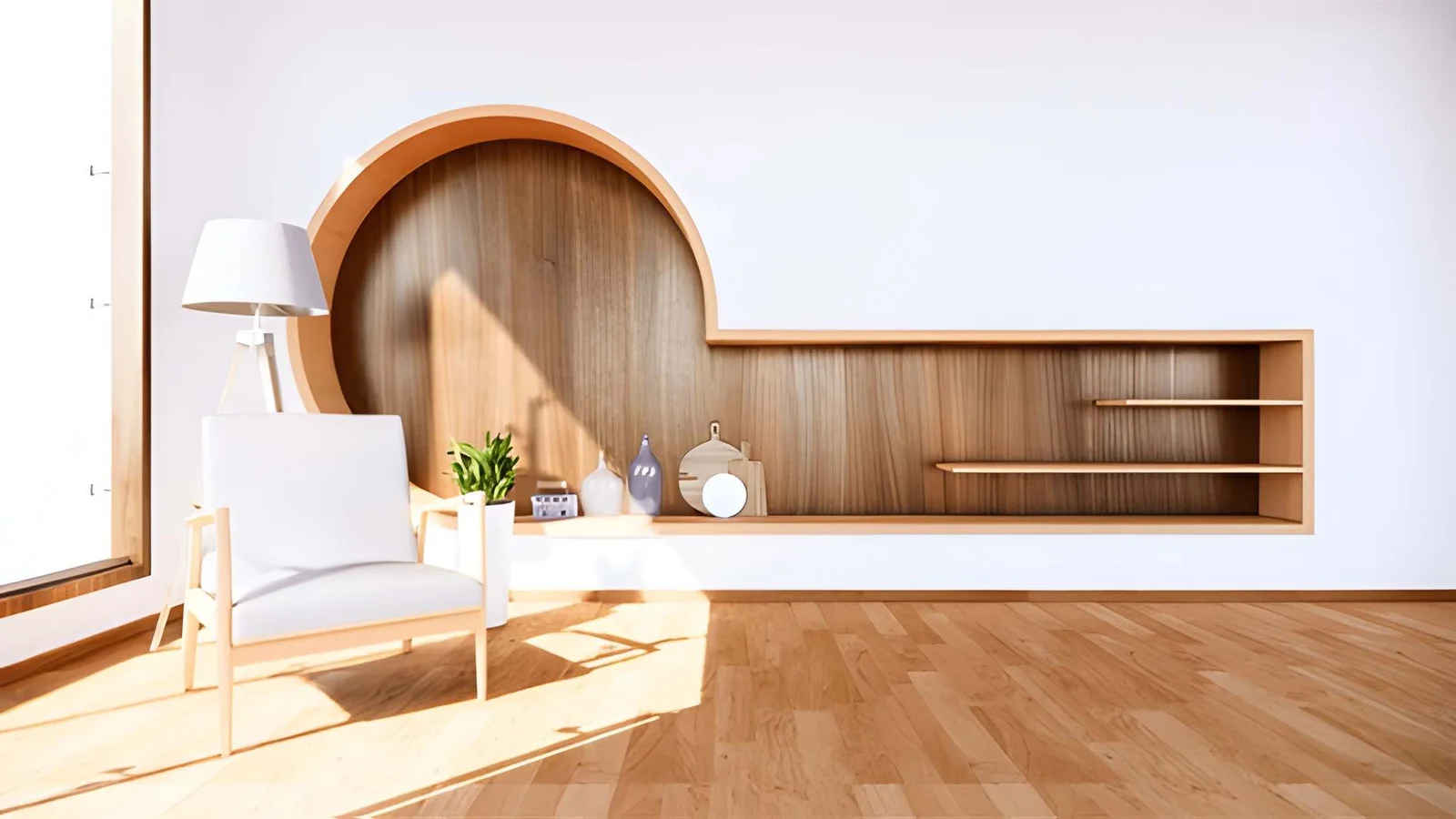
Most US homes have a storage problem and an empty wall problem simultaneously — and rarely connect the two. The empty wall in the hallway gets a mirror or a piece of art. The storage problem gets a cabinet squeezed into a corner or a bin pushed under a bed. The wall stays decorative and the storage stays awkward, when the same wall could be solving both problems at once.
Wall-based storage has a reputation problem in the US home market. The phrase brings to mind pegboards in garages, utility shelving in basements, and the kind of industrial organization systems that communicate “we’ve run out of options” rather than “we made a design decision.” That’s the legacy of treating wall storage as a practical last resort rather than a design-forward first choice.
The reality in contemporary US home design is that an empty wall handled correctly can carry significant storage capacity while reading as intentional, beautiful, and specifically designed for the room it’s in. The books look like a library. The kitchen items look like a professional cooking setup. The bedroom storage looks like architectural detail. None of it looks like the storage problem it’s also solving.
This article covers exactly how to make that work.
Why Empty Walls Are the Most Underused Storage Resource in US Homes
The floor space in most US homes is fully utilized — every room has furniture covering most of the available area. The vertical space above furniture height, between furniture tops and ceilings, is almost universally underused. An empty wall from floor to ceiling offers four to eight times the storage capacity of the floor area at its base — a resource most homeowners never access.
| Wall Zone | Height Range | Storage Potential | Common Use |
|---|---|---|---|
| Low zone | 0–18″ from floor | Low — awkward access | Baseboard, rarely used |
| Primary zone | 18″–72″ (eye level) | Very High — easy access | Most used — art, shelving, hooks |
| Upper zone | 72″–96″ | High — infrequent access | Often empty or limited use |
| Ceiling zone | 96″+ | Medium — requires step access | Almost never used residentially |
| Full-height | Floor to ceiling | Maximum — all zones combined | Built-ins only — transformative |
Most residential storage solutions use only the primary zone — the area between eye level and the floor. An empty wall used for storage that also looks designed typically uses the full height, treating the wall as a continuous surface with organized intent rather than individual hanging points.
Empty Wall Storage Solutions That Don’t Look Like Storage
The Picture Ledge System for Books and Objects
Picture ledges — shallow wall shelves, typically 3 to 5 inches deep — are the most visually clean shelf option available because books and objects placed on them face forward rather than showing spines, creating a gallery-like display rather than conventional shelving.
An empty wall with three to five picture ledges installed at varying heights holds a significant number of books and objects while reading as a curated display — not storage. The ledges themselves are typically painted to match the wall, which makes them nearly invisible as hardware and focuses the eye on what’s displayed rather than the infrastructure holding it.
Cost: $15 to $40 per ledge. Installation time: 30 minutes per ledge. Storage capacity: 10 to 20 books per running foot of ledge. Visual result: gallery or library — not storage.
Full-Height Floating Shelves as Architecture
This is the empty wall transformation with the highest storage capacity and the most significant visual impact. A full-height floating shelf unit — spanning from near the floor to near the ceiling, custom-sized or assembled from compatible modular components — reads as architectural detail rather than afterthought furniture when correctly designed.
The design principles that make full-height shelving read as architecture rather than storage:
Consistency of material. All shelves in the same material — white-painted wood, natural oak, or black metal — rather than a mix of different shelf types.
Depth appropriate to purpose. 8 to 10-inch depth for books and objects; 12 to 14-inch depth for larger items. Shelves deeper than necessary look utilitarian; shelves appropriately depth-sized look designed.
Organized display, not packed storage. Full shelves read as storage. Shelves with books interspersed with objects, varying heights, and some empty space read as design. The 60% rule: fill 60% of the shelf capacity and leave 40% for display breathing room.
| Full-Height Shelf Material | Visual Character | Best Room | Cost Range |
|---|---|---|---|
| White painted MDF | Clean, minimal, disappears | Living room, bedroom, office | $200–$800 |
| Natural oak or walnut | Warm, organic, furniture-quality | Living room, dining room | $400–$1,500 |
| Black metal frame + wood | Industrial-contemporary | Home office, kitchen, loft | $300–$1,000 |
| Built-in (custom carpenter) | Architectural, integrated | Any primary room | $800–$5,000 |
| IKEA Billy customized | Budget, highly adaptable | Any room | $150–$400 |
The Kitchen Empty Wall as Working Display
A blank kitchen wall is one of the highest-value empty wall storage opportunities in a US home — because kitchen tools, when organized correctly, look like professional intent rather than storage necessity.
A magnetic knife strip turns knife storage from counter clutter into a clean wall display. A rail system (Ikea KUNGSFORS or similar) with S-hooks turns cooking tools into a professional cooking backdrop. Open shelving on the kitchen wall holds everyday dishes in a way that reads as deliberate display rather than overflow from insufficient cabinet space.
The key principle: every item on a kitchen empty wall should be something you use regularly enough to justify display. One high-quality chef’s knife on a magnetic strip looks professional. Seven mixed knives of varying quality look like you didn’t know where else to put them.
The Bedroom Empty Wall as Personal Library
Bedrooms with an empty wall adjacent to the bed have one of the best opportunities for storage that doesn’t look like storage: a floor-to-ceiling bookshelf beside or behind the bed that functions as both storage and architectural headboard.
Books on a bedroom empty wall read as personal expression — they communicate something about who lives in the space in a way that a storage cabinet never does. A bedroom with floor-to-ceiling books on one wall looks like someone lives there thoughtfully. The same room with a storage cabinet of equivalent capacity looks like someone ran out of room.
How to Design Empty Wall Storage That Reads as Intentional
The difference between wall storage that looks designed and wall storage that looks like an afterthought comes down to four variables:
| Design Variable | Storage-Looking Outcome | Designed-Looking Outcome |
|---|---|---|
| Color | Different from wall — reads as furniture | Matches wall — reads as architecture |
| Consistency | Mixed shelf types and heights | Consistent material, regular grid or intentional variation |
| Content | Packed full — every space used | 60% filled with mix of objects and books |
| Scale | Too small for the wall — afterthought | Fills the wall — proportional to the surface |
An empty wall with shelving painted to match the wall, installed consistently, filled 60% with curated content at appropriate scale reads as designed. The same shelving in a contrasting color, inconsistent style, packed to capacity, and undersized for the wall reads as storage. The items are identical; the execution determines the perception.
Frequently Asked Questions
What’s the best empty wall storage solution for a small space?
Full-height picture ledges or floating shelves that extend from floor to ceiling — because vertical storage uses the wall’s full potential without consuming any floor space. A 4-foot wide empty wall with shelving from floor to 8-foot ceiling provides more storage than a 4-foot wide freestanding bookcase at the same location, with a smaller visual footprint and greater design flexibility.
How do I make shelves on an empty wall look designed rather than utilitarian?
Through four specific choices: paint the shelves to match the wall (makes the hardware disappear), maintain consistent spacing between shelves, fill approximately 60% of capacity with a mix of books and objects, and ensure the shelf unit is proportional to the wall — extending most of its width and ideally most of its height. Any single one of these improves the result; all four together is what produces the architectural quality most homeowners are aiming for.
Can an empty wall in a rental be used for storage without damaging the wall?
Yes — with the right approach. Command strip-rated shelves (up to 5 lbs per strip, stackable) work for lightweight display. Tension rod systems between floor and ceiling hold significant weight without any wall attachment. Free-standing shelving units tall enough to lean against the wall provide visual integration without any attachment at all. For heavier storage needs, a furniture-based solution (bookcase leaned against the empty wall) provides the storage benefit without permanence.
What items should never go on visible wall storage?
Anything that undermines the designed-rather-than-storage reading: cleaning supplies, medications, financial documents, excessive quantities of any single item (twelve bottles of the same shampoo), items in poor condition, or anything that reads as overflow from better storage that doesn’t exist. Visible wall storage should contain only items you’re comfortable displaying — either because they’re beautiful, meaningful, or communicate something you want to communicate about the space.
Is floating shelving or freestanding shelving better for an empty wall?
Floating shelving (wall-mounted without visible support) reads as more architectural and contemporary, requires less floor space, and allows the floor beneath to remain visible — which makes the room feel larger. Freestanding shelving is easier to install, works in rentals, and can be moved. For permanent homes where the visual result matters most, floating shelving is consistently more attractive. For flexibility and ease, freestanding against the wall produces most of the visual benefit.
The Bottom Line
An empty wall is one of the most versatile resources in any US home — capable of solving real storage problems while simultaneously adding visual interest, personality, and architectural character to a room. The key is treating it as a design decision rather than a storage decision: choosing materials that match or complement the wall, installing at the right scale for the surface, filling with curated content rather than packed capacity, and committing to a single clear purpose that the whole wall serves.
Done correctly, the empty wall becomes one of the first things visitors notice about a room — not because it looks like a storage solution but because it looks like the room was designed from the wall outward rather than furnished and then decorated.
Must visit https://thehometrottersblog.com/ for solving storage problems.