

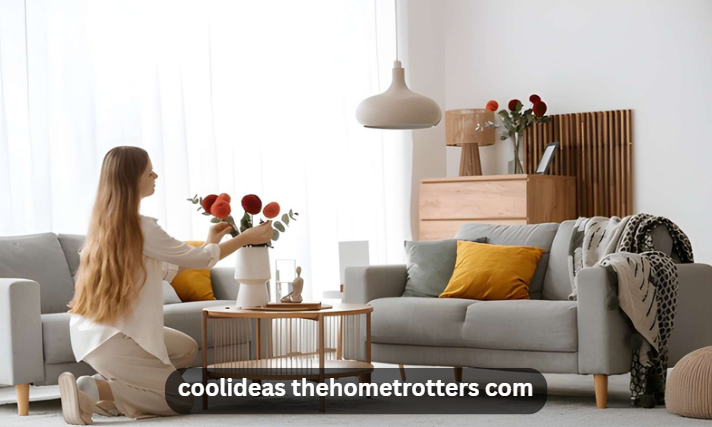
Most home design content tells you the same five things in a different order. Buy a mirror. Get a plant. Paint your walls beige. It is exhausting.
Coolideas take a different angle. Instead of recycling generic advice, the platform pulls inspiration from a travel-informed perspective — the kind you develop when you have actually stayed in well-designed spaces around the world and started noticing what makes a room feel like somewhere, rather than nowhere. The result is a collection of home ideas that feel specific and considered rather than copy-pasted from a mood board.
This guide breaks down the most actionable ideas from that approach: how to use them room by room, what they actually cost, and why they work — especially for US renters and homeowners dealing with real square footage constraints.
What Makes CoolIdeas Different from Generic Decor Sites?

Most home content is written for aspirational homes, not actual ones. Coolideas centers on spaces that have limitations — rental restrictions, tight budgets, small floor plans — and treats those limits as design constraints to work with, not problems to apologize for.
Three things separate this approach from standard decor advice:
| Principle | What It Means in Practice |
| Travel-informed design | Borrowing texture, material, and layout ideas from well-designed global spaces |
| Non-permanent upgrades | Peel-and-stick, layered textiles, rearrangement — no drilling required |
| Edit-first mindset | Removing what blocks light and traffic before adding anything new |
That last one is underrated. Most people buy more stuff when their room feels off. Often the room just has too much in it already.
Room-by-Room: Ideas That Actually Translate

Living Room: Start by Taking Things Out
Our platform approach to living rooms starts with subtraction. Before moving anything in, assess what is blocking natural light or creating visual dead zones. A sofa pushed too close to a coffee table cuts the room in half. A bookshelf against the wrong wall eats square footage without adding anything.
Once the room breathes, layer back in with intention:
- Rattan or wicker accent pieces (add warmth without visual weight)
- A large area rug that defines the seating zone — sized correctly, meaning the front legs of all sofas sit on it
- One vintage or thrifted piece with real character: a ceramic lamp, a worn leather pouf, a crockery find from an estate sale
That single non-mass-produced item does more for a room’s personality than five matching pieces from a big-box store.
Kitchen and Bathroom: Renter-Friendly Upgrades That Stick
The go-to tools here are peel-and-stick products. They have improved dramatically in quality over the past few years.
| Product Type | Best Use | Average Cost (US) | Removable |
| Peel-and-stick wallpaper | Accent wall, backsplash | $30–$80/roll | Yes |
| Vinyl floor tiles | Kitchen or bathroom floor refresh | $1–$3/sq ft | Yes |
| Removable cabinet liner | Drawer and shelf refresh | $15–$30 | Yes |
| Adhesive tile sheets | Behind stovetop or vanity | $20–$60 | Yes |
These are not permanent fixes. They are visual upgrades that work inside a lease.
Bedroom: The Case for Doing Less
Trisha consistently points out that most US bedrooms are over-furnished. A dresser, a bed frame, two nightstands, and a bench at the foot of the bed in a 12×12 room leaves almost no open floor — which makes the space feel smaller and harder to relax in.
The fix is almost always editing. Pull out the bench. Move one nightstand if symmetry is forcing clutter. Consider a bed frame without a footboard. The resulting open floor space makes the room feel significantly larger without spending a dollar.
Then add softness: a weighted blanket, blackout curtains in a warm tone, and one reading lamp at the right height (shade at shoulder level when seated).
How to Approach Budget: A Realistic Breakdown

One of the more useful things about ththomable home tips is that it does not pretend a $50 budget transforms a space. But it also does not require thousands.
Here is a realistic spending framework for a living room refresh:
| Item | Budget Option | Mid-Range Option |
| Area rug | $80–$120 (IKEA, Amazon) | $200–$400 (Rugs USA, Loloi) |
| Throw pillows (x4) | $40–$60 | $80–$160 |
| Accent lamp | $30–$60 | $80–$150 |
| One vintage/thrifted piece | $10–$40 (thrift store) | $60–$150 (Chairish, eBay) |
| Peel-and-stick wallpaper (accent wall) | $50–$100 | $100–$200 |
| Total | $210–$380 | $520–$1,060 |
Either range can produce a noticeably better room. The budget version just requires more patience at the thrift store.
The Design Principle Behind CoolIdeas

The underlying idea that runs through ththomideas ideas for homes is not about style in the fashion sense. It is about building a space that reflects how you actually live rather than how you want to appear to live.
That means buying things you will use, not things that photograph well. It means accepting that a small apartment done well beats a large one done carelessly. And it means understanding that most good-looking rooms have one strong focal point — not six things competing for attention.
Coolideas work because it skips the aspirational fluff and gets specific about what to do, what to remove, and what is actually worth spending money on.
Frequently Asked Questions
Can renters use these ideas without violating a lease?
Yes. The approach prioritizes non-permanent upgrades: peel-and-stick products, removable wallpaper, area rugs, and textile layering. None of these require drilling, painting, or structural changes.
What is the fastest upgrade to improve a room?
Rearranging furniture to improve natural light flow and traffic paths costs nothing and makes an immediate difference. Most rooms improve by removing one or two pieces rather than adding new ones.
How often should you update your home decor?
According to home decor ideas, small textile swaps (pillows, throws) every 1–2 years keep a space feeling current. Larger changes, like repainting or new furniture, work well every 3–5 years or after a major life change.
Is it worth buying vintage over new?
For accent pieces, yes. One thrifted item with real character — a lamp, a ceramic bowl, a piece of art — does more for a room’s personality than several matching mass-produced items.
 Admin
Admin