
Most smart home upgrades promise more than they deliver. You buy a device, set it up, use it enthusiastically for two weeks, and then it becomes part of the background — one more thing connected to an app you rarely open. The novelty wears off and the practical benefit turns out to be marginal.
Smart plugs are different. They’re one of the few smart home devices where the real value only becomes clear after you’ve lived with them for a few weeks — specifically when you’ve put them on the appliances that run the same routine every single morning. The coffee maker. The electric kettle. The toaster. The bathroom hair dryer. The phone charger that stays plugged in all day doing nothing.
What happens when those appliances get smart plugs isn’t just convenience. It’s a small but measurable shift in how your morning runs, how much energy your home consumes, and what you actually know about your own daily habits. Some of it is expected. Some of it is genuinely surprising.
This article covers what smart plugs actually do to morning appliances, what the data reveals about energy use, how routines change once automation handles the repetitive parts, and whether the investment is worth it for US homeowners.
What Smart Plugs Actually Do — Beyond the Marketing
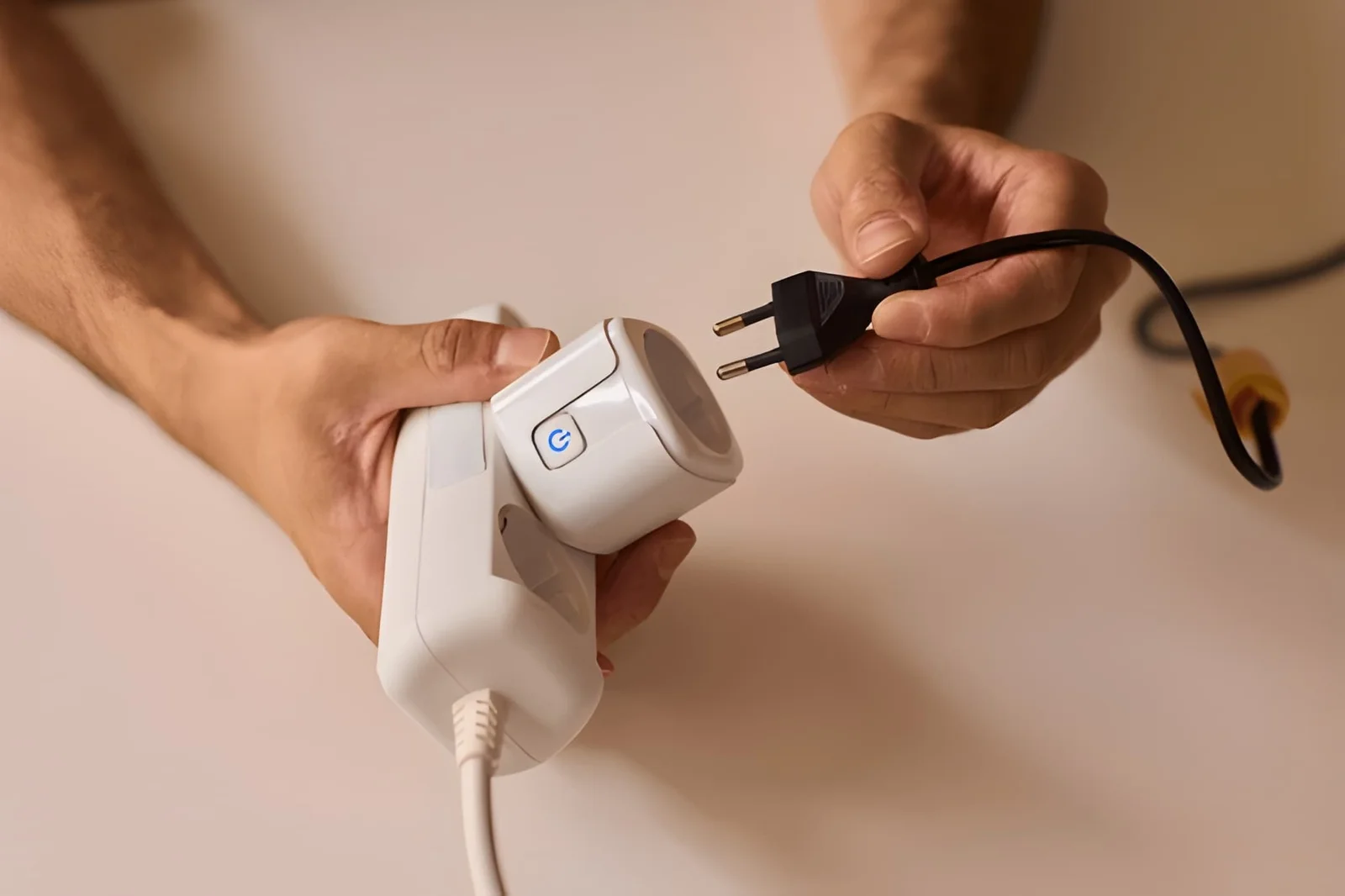
Before getting into what happens specifically with morning appliances, it helps to be clear about what smart plugs are and aren’t. They’re not magic. They’re power outlets with Wi-Fi connectivity, scheduling capability, and energy monitoring built in. That’s it. What makes them genuinely useful is how those three features interact with appliances you use on a fixed schedule.
| Smart Plug Feature | What It Does | Morning Appliance Application |
|---|---|---|
| Scheduling | Turns device on/off at set times | Coffee maker starts before alarm goes off |
| Remote control | On/off from phone anywhere | Turn off iron you forgot while already at work |
| Energy monitoring | Tracks watts consumed per device | Reveals actual cost of daily appliance use |
| Automation triggers | Responds to time, location, or other devices | Kettle starts when phone alarm fires |
| Countdown timer | Cuts power after set duration | Hair dryer off after 30 minutes automatically |
| Away mode | Cuts phantom load when not home | Eliminates standby draw on idle appliances |
What Actually Changes When Morning Appliances Get Smart Plugs
The Coffee Maker: The Most Immediately Useful Application
Putting a smart plug on a coffee maker with a built-in clock is redundant — the appliance already has scheduling. But the majority of US drip coffee makers don’t have programmable timers, and even those that do require resetting after power outages.
A smart plug turns any coffee maker into a scheduled appliance. Set it to power on at 6:45am and the machine starts heating water before you’re out of bed. By the time you reach the kitchen, the coffee is ready. That’s not a trivial convenience — it’s a reliable daily routine change that removes one decision and one wait from the part of the day when most people have the least patience for either.
More interestingly, energy monitoring on a coffee maker reveals something most homeowners don’t know: a coffee maker left on its warming plate for two hours after brewing consumes nearly as much energy as the brewing cycle itself. Smart plugs cut that automatically.
The Electric Kettle: Automation That Actually Saves Time
Electric kettles heat water fast — typically two to three minutes for a full kettle. A smart plug doesn’t make that faster. What it does is eliminate the gap between waking up and remembering to turn it on. Schedule the kettle to run at 7:00am, and by the time you’ve gotten out of bed and reached the kitchen, the water is already hot.
For households where morning tea or pour-over coffee is a daily ritual, this is a genuinely useful change that compounds across every morning of the year.
The Hair Dryer: The Safety Application
Hair dryers are among the highest wattage appliances in most US bathrooms — typically 1,800 to 2,000 watts. They’re also among the most commonly left plugged in, drawing standby power even when switched off, and occasionally left running.
| Appliance | Typical Wattage | Standby Draw | Smart Plug Benefit |
|---|---|---|---|
| Drip coffee maker (warming) | 40–60W | Low | Cuts warming plate automatically |
| Electric kettle | 1,200–1,500W | Near zero when off | Scheduling, not standby |
| Hair dryer | 1,800–2,000W | 1–5W standby | Auto-off timer, safety cutoff |
| Phone charger (idle) | 0.1–0.5W | Continuous | Eliminates phantom load |
| Toaster | 800–1,500W | 1–3W standby | Auto-off after use window |
| Electric razor charger | 5–15W | Continuous when plugged | Scheduled charging window |
A smart plug with a countdown timer on a hair dryer cuts power automatically after a set window — useful as a backup for people who regularly leave home wondering whether they turned it off.
The Energy Data: What Morning Appliances Actually Cost
This is where smart plugs deliver a value that’s easy to overlook. Energy monitoring — available on most mid-range and premium smart plugs — shows exactly how much electricity each appliance consumes and translates that into cost over time.
The numbers are often surprising. US homeowners consistently underestimate how much phantom load — power drawn by devices in standby — adds up across a year.
| Scenario | Daily Energy Cost (est.) | Annual Cost (est.) |
|---|---|---|
| Coffee maker warming plate (2 hrs/day) | $0.01–$0.02 | $4–$7 |
| Phone charger idle all day | $0.001–$0.002 | $0.50–$1 |
| TV on standby | $0.003–$0.005 | $1–$2 |
| Hair dryer plugged in, off | $0.0003–$0.001 | $0.10–$0.40 |
| Multiple standby devices combined | $0.05–$0.15 | $18–$55 |
Individual standby costs are small. Combined across ten to fifteen always-plugged devices in a typical US home, they add up to $20 to $60 annually — not life-changing, but real, and visible for the first time once smart plugs start reporting it.
How Morning Routines Actually Change With Smart Plugs in Place
The behavioral shift that smart plugs produce in morning routines is subtler than the convenience argument suggests. It’s not just that appliances turn on automatically — it’s that the cognitive load of managing the morning reduces slightly. Small decisions that happen on autopilot in a tired, pre-caffeinated state get removed from the equation.
Behavioral researchers call this reducing “decision fatigue” — the mental cost of small choices that accumulates early in the day before it’s even conscious. A morning where the coffee is already made, the kettle is already hot, and the phone is already charged from a scheduled overnight window is a morning with slightly more cognitive bandwidth available for things that actually require attention.
That’s a soft benefit that doesn’t show up in energy monitoring data. But it’s real and it’s consistent across the homeowners who use smart plugs deliberately rather than as a novelty.
What to Look for When Buying Smart Plugs for Morning Appliances
Not all smart plugs are equal. For morning appliance applications specifically, a few features matter more than others:
| Feature | Why It Matters for Morning Use | Worth Paying For? |
|---|---|---|
| Energy monitoring | Reveals actual appliance costs | Yes — choose this over basic models |
| Scheduling reliability | Must fire on time, every time | Yes — read reviews specifically for this |
| High wattage rating | Hair dryers need 15A minimum | Essential — check before buying |
| App stability | Unreliable apps defeat the purpose | Research before committing to an ecosystem |
| Voice assistant compatibility | Useful for hands-free morning control | Nice to have, not essential |
| Local control option | Works without internet if cloud goes down | Worth considering for reliability |
For high-wattage appliances like hair dryers and coffee makers, verify the smart plug’s amperage rating before purchase. Most US smart plugs handle 10 to 15 amps. Hair dryers at 1,800 to 2,000 watts need a plug rated for at least 15 amps — underpowered plugs on high-draw appliances are a safety issue, not just a performance one.
Frequently Asked Questions
Are smart plugs safe to use on high-wattage morning appliances like hair dryers?
Yes, when the plug is rated for the appliance’s draw. Most hair dryers run at 1,800 to 2,000 watts, which requires a smart plug rated for 15 amps at 120 volts. Check the plug’s amperage rating before use on any high-wattage appliance. Quality plugs from established brands include thermal protection that cuts power if the device overheats.
Do smart plugs actually save meaningful money on energy bills?
For individual appliances, the savings are modest — typically $5 to $55 annually depending on how many standby devices are addressed. The more meaningful benefit is visibility: knowing exactly what each appliance costs changes how you use them, which produces ongoing savings beyond what the plugs themselves automate.
What’s the best morning appliance to start with when trying smart plugs?
The coffee maker, for most US households. The scheduling benefit is immediate and daily, the energy monitoring reveals real data about warming plate consumption, and the appliance runs within a predictable wattage range that any standard smart plug handles safely.
Do smart plugs work without a smart home hub?
Most current smart plugs connect directly to home Wi-Fi without requiring a separate hub. They’re controlled through manufacturer apps and typically integrate with Amazon Alexa, Google Home, and Apple HomeKit for voice control. Hub-free operation makes them one of the lowest-friction smart home entry points available.
How many smart plugs does a typical morning routine actually need?
Three to five covers most US morning appliance setups effectively: coffee maker or kettle, hair dryer or electric razor charger, phone charging station, and one or two additional outlets for whatever else runs on a fixed morning schedule. Beyond that, the marginal benefit per plug decreases.
The Bottom Line
Smart plugs on morning appliances don’t transform your life. What they do is more modest and more durable: they remove small friction points from the part of the day when friction costs the most, reveal energy data that most US homeowners have never seen, and create a morning routine that runs on schedule rather than on memory.
The coffee is ready before you’re out of bed. The kettle is already hot. The hair dryer cuts off automatically. The phone charged on schedule and stopped drawing power when it hit 100%. None of that is dramatic. All of it is genuinely useful — every single morning, compounding across every day of the year.
Must visit https://thehometrottersblog.com/ for smart plug appliances.