

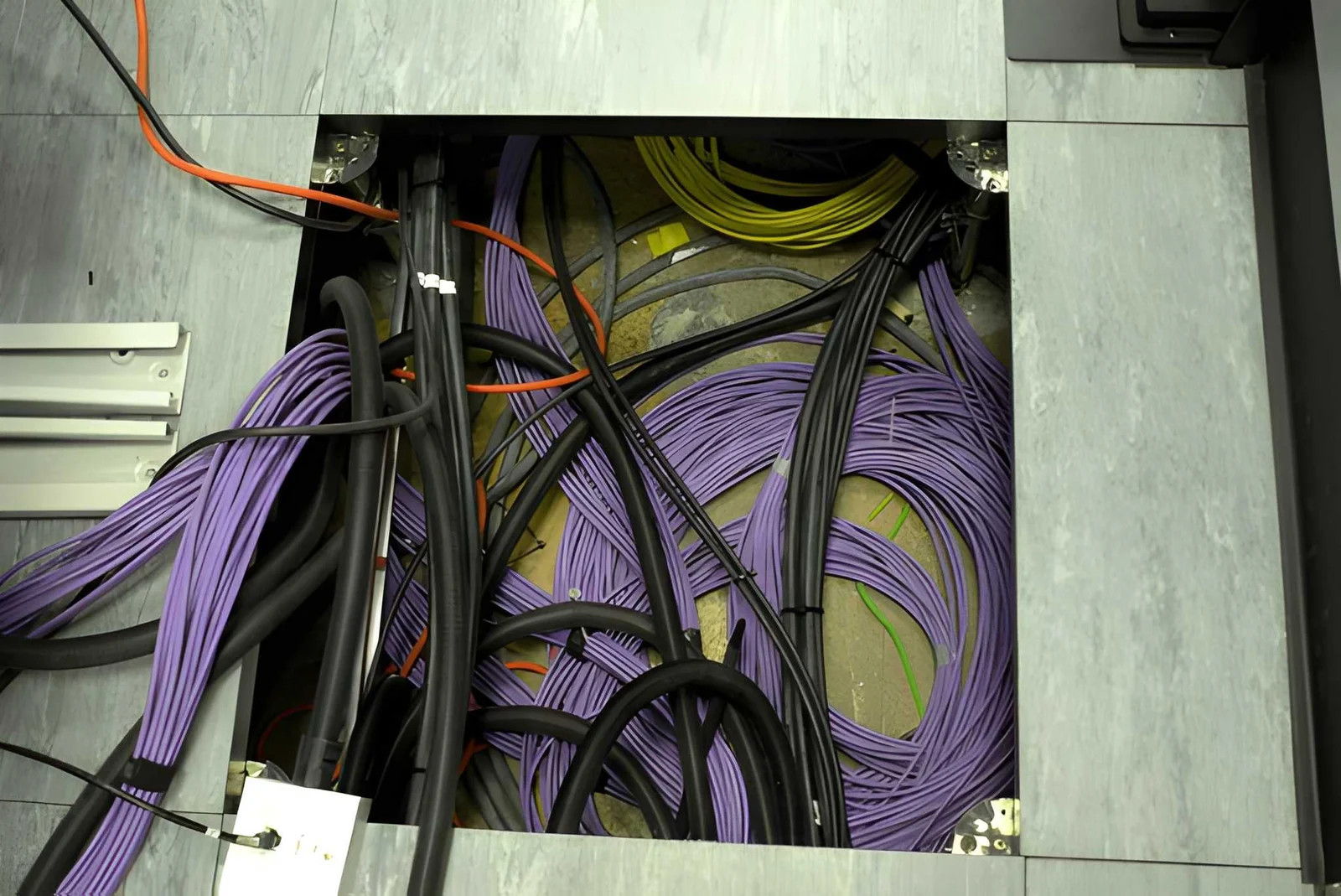
Everyday cables are one of those home problems that’s almost impossible to unsee once you’ve noticed it. A living room can be well-furnished, well-lit, and genuinely designed — and then a tangle of charging cables, a TV wire running down the wall, or a surge protector sitting in the middle of the floor pulls the entire visual together into something that looks significantly less considered than everything else suggests.
The standard cable management solutions sold in home stores often make this worse rather than better. Visible cable raceways in bright white plastic. Over-engineered cable management boxes that draw attention to the problem they’re solving. Aggressive routing systems that suggest the homeowner has been waging active war on their cables. These solutions fix the cable problem and introduce an aesthetic problem — which is hardly an improvement.
The best approach to hiding everyday cables in a home is the one that becomes invisible rather than the one that announces itself as a solution. This article covers the specific techniques that work across different rooms and cable types, which methods look best in lived-in US homes, how to approach the problem without overengineering it, and the common cable management mistakes that make rooms look more designed-around than naturally resolved.
Why Everyday Cables Are Such a Persistent Visual Problem
Understanding what makes everyday cables visually disruptive explains why certain solutions work and others don’t.
Cables create visual noise through two mechanisms: they introduce lines that cross the room’s natural visual order, and they reveal the mechanics of a space — all the infrastructure that makes the room function — in a way that disrupts the sense that the room is a finished environment.
| Cable Problem Type | Visual Effect | Best Management Approach |
|---|---|---|
| TV cable running down exposed wall | Vertical line interrupting wall surface | In-wall routing or cable cover painted to match wall |
| Charging cables on counters and nightstands | Surface clutter, multiple crossing lines | Cable tray or charging station with integrated routing |
| Power strips visible on floor | Industrial appearance, draws eye downward | Hidden behind furniture or in cable management box |
| Lamp cords crossing floor | Trip hazard + visual noise | Route behind furniture legs along wall |
| Multiple cords at desk | Cable chaos undermines workspace feel | Under-desk cable tray or magnetic clip system |
| Entertainment center cable mass | Entire zone reads as unresolved | Cable box concealment + organized bundling at rear |
Cable Management That Stays Invisible
The Paint-Match Method for Wall-Mounted TV Cables
The most effective and least obvious solution for TV cables running down a wall is a cable cover (raceway) painted exactly to match the wall color. Unpainted white cable covers are the most commonly installed and the most visually disruptive — they read clearly as cable management rather than disappearing into the surface.
A paintable flat plastic cable cover costs $10 to $20. Painting it with the room’s exact wall color takes fifteen minutes and produces a cable channel that most visitors never notice — because the eye reads it as a shadow or architectural detail rather than a cable solution.
The alternative that looks best when budget allows: in-wall cable routing. Running the TV’s power and signal cables through the wall behind the television produces a truly clean look with no visible cable management. The materials cost $20 to $50; the installation requires cutting two small wall openings and is manageable for most homeowners comfortable with basic DIY.
| TV Cable Management Option | Visual Result | Cost | Difficulty |
|---|---|---|---|
| Unpainted white raceway | Obvious — worse than cable alone | $10–$20 | Very Low |
| Painted-to-match raceway | Near-invisible — reads as wall detail | $10–$25 (including paint) | Low |
| Fabric cord cover | Visible but soft — less industrial | $10–$30 | Very Low |
| In-wall cable routing kit | Completely invisible | $20–$50 | Medium |
| Professional wall cable installation | Completely invisible, clean finish | $150–$300 | None (professional) |
Furniture-Based Cable Concealment
The most underused cable management approach in US homes: routing everyday cables behind, beneath, and through existing furniture rather than purchasing additional management hardware.
Most sofas have a rear base gap that allows lamp cords to run behind them without being visible from the front. Most entertainment centers have a rear panel that can be removed and replaced with a cable-management version. Most beds have a frame that allows phone charger cables to route down the back leg to an outlet without draping across the nightstand.
This approach costs nothing and produces the most natural-looking result because it uses existing furniture geometry rather than adding visible management hardware. The cable disappears not because it’s been contained but because it’s been routed through space the eye doesn’t track.
Charging Station Consolidation
The proliferation of everyday cables at charging locations — typically the bedroom nightstand, the kitchen counter, and the desk — is one of the most visible cable problems in US homes because charging cables are inherently tangled, numerous, and placed on surfaces the eye naturally lands on.
A charging station with integrated cable management — a box or tray with a single power input and multiple outputs, with internal routing that keeps cables contained — replaces four to six visible cables with one organized unit. The unit itself can be chosen to match the room’s aesthetic: wooden boxes for warm interiors, brushed metal trays for contemporary spaces, fabric-covered options for casual rooms.
The key aesthetic principle: the charging station should match the surface it sits on and the room’s existing aesthetic rather than looking like a purchased solution. A bamboo charging box on a wooden nightstand disappears. A bright white plastic charging hub on the same surface draws the eye to it.
| Charging Location | Cable Volume | Best Concealment Approach | Cost |
|---|---|---|---|
| Bedroom nightstand | 1–3 devices | Bedside charging tray with side cable exit | $20–$60 |
| Kitchen counter | 1–2 devices | Built into drawer with outlet, or rear-routed to outlet | $30–$80 |
| Living room end table | 1–2 devices | Small cable box with decorative cover | $15–$40 |
| Home office desk | 3–6 devices | Under-desk cable tray + desk grommet | $20–$60 |
| Entry table | 1–2 devices | Small charging pad with integrated cable | $25–$50 |
The Strategic Furniture Placement Approach
Power strips, surge protectors, and cable hubs — the most visually disruptive everyday cables infrastructure in US homes — almost always sit in their current visible location because that’s where they were placed when the furniture was arranged. Moving the furniture arrangement so these elements are naturally hidden behind or beneath pieces that are already there costs nothing and produces immediate improvement.
A power strip behind a sofa’s lower back, below the furniture line, is invisible from any standing or seated position. A cable hub on the floor behind an entertainment center is invisible from the front of the room. A phone charger cable routed down the back of a nightstand rather than the front eliminates it from the surface view.
The Everyday Cables Mistakes That Make Rooms Look Overdesigned
Some cable management approaches create a new aesthetic problem while solving the original one. These are worth naming explicitly because they’re sold as solutions and appear in design advice frequently.
Visible cable raceways in contrasting colors. A white cable raceway on a grey wall, or a black raceway on a white wall, draws more attention to the cable’s path than the cable itself would. If raceways are used, they must be painted to match the surface exactly.
Overly engineered desk cable management systems. Elaborate under-desk cable routing with visible aluminum channels, labeled clips, and color-coded bundling produces a desk that looks like an IT closet rather than a workspace. Simpler is consistently better.
Cable boxes that are visually significant. A cable management box that’s more visible than the cables it contains has solved nothing. The box should be smaller and less visually prominent than the cable mass it replaces.
Cable ties in the wrong colors. Black cable ties on a white cable bundle. White cable ties on black cables. The mismatch is as visible as untied cables. Use ties that match the cables or the surface behind them.
| Common Cable Management Mistake | What It Produces | Better Approach |
|---|---|---|
| White raceway on grey wall | Raceway more visible than cable | Paint raceway to exact wall color |
| Visible cable management box | Box draws eye to the problem | Choose size/material matching surface |
| All cables bundled at front of desk | Organized but still visible | Route bundles behind/under desk |
| Extension cord across open floor | Trip hazard + visual interruption | Run behind furniture perimeter |
| Cable ties contrasting color | Ties visible on cable run | Match tie color to cable or background |
Frequently Asked Questions
What’s the best way to hide TV cables without in-wall routing?
A paintable cable raceway matched exactly to the wall color is the most effective non-invasive option. The key is matching the paint precisely — most hardware stores can match existing wall paint from a chip. Painted to match, the raceway reads as a wall feature rather than a cable solution. Unpainted white is significantly worse than no solution in most rooms.
How do I manage everyday cables at a bedroom nightstand without buying a lot of products?
Route the charging cable down the back of the nightstand rather than the front, tuck any excess length behind the piece, and use a single charging surface (a wireless pad or small tray) rather than multiple loose cables. These changes cost nothing if you already have the cables and eliminate the visual tangle from the most-seen surface in the bedroom without purchasing any management hardware.
Can everyday cables be managed in a rental without permanent wall changes?
Yes — the non-permanent approaches (furniture-based routing, charging station consolidation, floor-level cable clips that use adhesive rather than screws) produce most of the aesthetic benefit without any wall work. In-wall routing is the only rental-incompatible approach; all others work in any living situation.
Why do most cable management products make the problem look worse?
Because they’re designed for function rather than aesthetics — they contain cables but draw attention to themselves in the process. The most effective cable management is the kind that becomes invisible: painted to match the wall, hidden behind existing furniture, or integrated into a surface object that matches the room’s existing aesthetic. Visible solutions substitute one visual problem for another.
What’s the single most impactful everyday cables change for most US living rooms?
Routing the TV’s power cable through the wall or covering it with a wall-colored raceway. The TV cable running down an exposed wall is the most visible everyday cables problem in US living rooms — it’s at eye level, on the room’s focal surface, and impossible to miss once noticed. Resolving it produces a more significant visual improvement than any other single cable management change in the room.
The Bottom Line
Hiding everyday cables effectively means making the solution invisible rather than making the cables invisible. The painted-to-match raceway, the furniture-routed cord, the charging station that matches its surface — these solutions work because they don’t announce themselves as solutions. They become part of the room’s existing visual language rather than introducing a new layer of management hardware that the eye tracks as a separate category.
Start with the TV cable — it’s the highest-impact single change. Route charging cables behind furniture before buying management products. Choose charging stations that match existing surfaces. Use cable ties that match the cables, not ones that contrast. And when in doubt, the solution that looks like it was always there is better than the one that looks like it was installed.
For cable management ideas must visit https://thehometrottersblog.com/